Understanding the legal difference in nature tourism
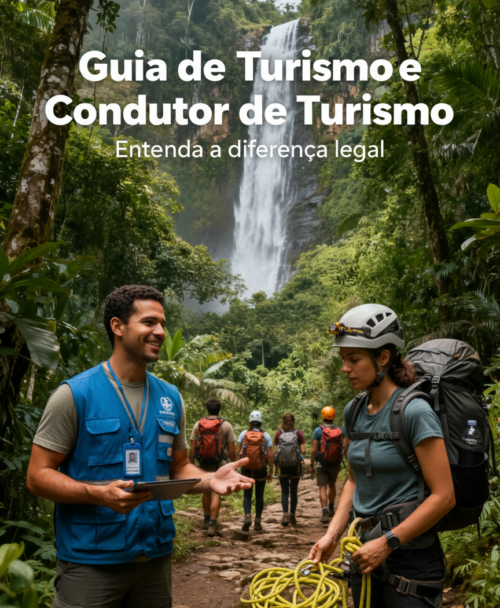
In nature tourism, understanding who may work, under what conditions and who takes legal responsibility for the activity is essential for visitor safety and for a properly run operation. The distinction between a Tour Guide (Guia de Turismo) and a local nature guide (Condutor de Turismo) is not just a matter of terms; it is a legal one.
This article is for information only and aims to explain clearly how Brazilian law treats these two roles.
Tour Guide: a regulated profession
Tour Guide is a profession regulated at the federal level, under:
- Law No. 8,623/1993
- Decree No. 946/1993
To work as a Tour Guide, a professional must:
- hold recognized technical training;
- be properly registered with Cadastur, Brazil’s official tourism registry;
- work within the categories set out in law.
Regulating and inspecting the profession is the responsibility of the Ministry of Tourism.
Local nature guide: an occupation not regulated by federal law
The local nature guide (Condutor de Turismo):
- is listed in the Brazilian Classification of Occupations, CBO 5115-05;
- the CBO is administrative and statistical in nature and does not, by itself, grant a legal license to practice;
- there is no federal law regulating the profession of local nature guide under the National Tourism Policy.
In environmental regulations and technical documents, the local nature guide may also be called a Visitor Guide (Condutor de Visitantes), especially in the context of protected areas.
Working in protected areas
Guiding visitors in protected areas (Unidades de Conservação, UCs) falls under Brazil’s environmental legal framework, especially:
- Law No. 9,985/2000 (National System of Protected Areas, SNUC);
- the rules and regulations of the agency that manages each area.
In federal protected areas, a local nature guide may only work with specific accreditation, authorization or permission granted by the area’s administration. Authorizing this work is the exclusive responsibility of the agency that manages the protected area.
Working outside protected areas
Outside protected areas, or in those that have no specific rules for guides, the general tourism rules apply, in particular:
- Law No. 11,771/2008 (General Tourism Law), updated by Law No. 14,978/2024;
- Decree No. 7,381/2010.
In these cases:
- individuals generally work linked to a tourism agency or operator registered with Cadastur;
- legal, operational and safety responsibility lies with the tourism service provider that sells or runs the activity.
Safety in adventure tourism activities
For activities classified as adventure tourism, a Safety Management System is a regulatory requirement and must be:
- implemented and maintained by the tourism service provider;
- applied regardless of the title given to the professional who leads the group.
This obligation is set out in Decree No. 7,381/2010, which establishes requirements for qualified guiding, risk analysis, consumer information and safety procedures.
What visitors need to know
In short:
- a Tour Guide is a regulated profession, with technical training and Cadastur registration;
- a local nature guide is an occupation listed in the CBO, whose work depends on the rules of the place where the activity happens;
- in protected areas, the managing agency’s rules prevail;
- outside protected areas, responsibility lies with the formally registered agency or operator;
- safety is the duty of whoever operates and sells the tourism service.
Watrip Turismo operates legally and responsibly, in line with current law, prioritizing safety, operational clarity and respect for the rules that apply to nature tourism.
Regulatory updates
The laws that apply to nature tourism are constantly updated and revised. This article was written based on the rules in force on its publication date, reflecting the current legal understanding of the work of Tour Guides and local nature guides.
Later changes to laws, decrees, ordinances or technical standards may modify, complement or override the information presented here. Whenever necessary, check the updated legislation and the specific rules that apply where the activity takes place.