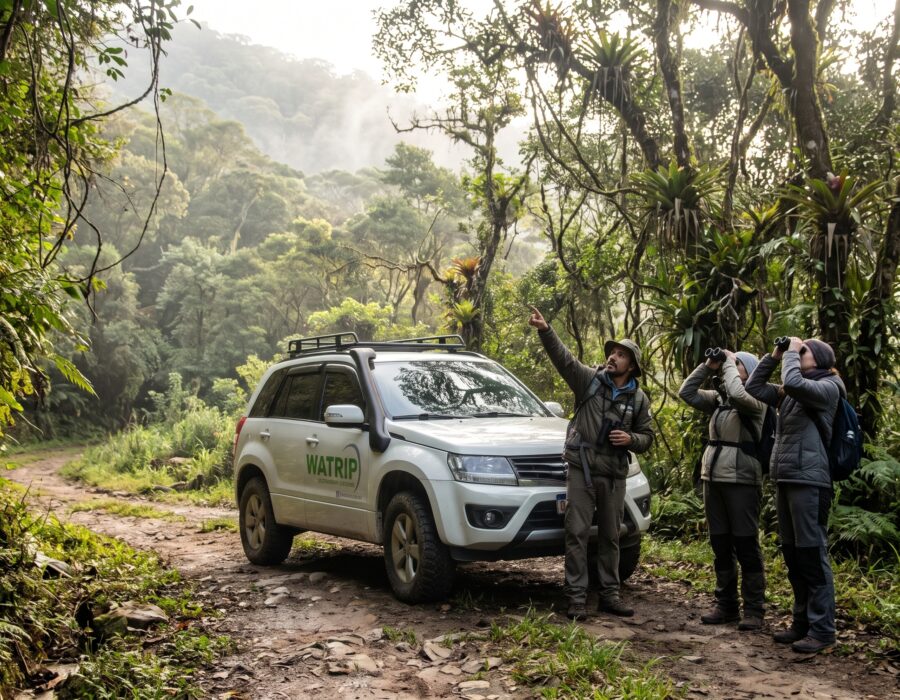
Tourism in protected natural areas is entering a new and excellent operational cycle in Brazil. The expansion of public-use concessions has brought heavy investment, better infrastructure and, above all, the professionalization of visitation.
Along with this progress, however, comes a greater need to understand the legal and technical framework that governs activities within these areas. Unlike conventional tourism, visits to state parks, national parks and other protected areas follow their own legal regime. There are specific rules on access, guiding, tour operations and, above all, safety.
Why are there rules? Understanding the SNUC
Every tourism activity in Brazil’s protected areas is subject to the National System of Protected Areas (SNUC), established by Law No. 9,985/2000.
The SNUC sets the legal basis for creating, managing and opening these areas to the public, defining strict criteria for:
- biodiversity conservation;
- visitor management and use zoning;
- carrying capacity (the maximum number of people);
- permitted activities;
- monitoring of environmental impacts.
In other words, tourism in these areas is not a free-for-all; it is conditional on being compatible with the conservation goals of each site. The aim is for you to enjoy nature today and for it to remain there, intact, for future generations.
What does tourism in these areas include?
Under SNUC rules, tourism is classified as “public use” and includes a range of activities, as long as they are authorized by each area’s management plan. The main nature and adventure activities include:
- interpretive trails and long-distance hikes;
- birdwatching and wildlife observation;
- waterfall swimming and crossings;
- mountaineering;
- cycle touring, canoeing and water activities;
- contemplative visits and environmental education.
Each of these activities has different levels of impact and risk. That is exactly why there are specific rules for operating, guiding and monitoring them.
Guiding visitors: accreditation requirements and the agency’s responsibility
Have you ever wondered why it matters to hire official guides? In protected areas, visitor guiding cannot be informal or amateur.
In parks that already have a regulated system, guiding without local authorization granted by agencies such as ICMBio (Ordinance No. 769/2019) or INEA, Rio de Janeiro’s state environmental agency, is not allowed. An authorized guide is essential to direct visitors safely, ensure the rules are followed and support impact monitoring.
And what if the protected area has no public call or accreditation system for guides in place? In these cases, the activity does not happen without rules; it must fully comply with the public-use rules set by the agency that manages the area and with its management plan.
Whether guiding is mandatory, by an accredited local guide or a licensed Tour Guide, depends on the specific rules of each protected area.
When the experience is sold by a tourism agency, the operator’s legal responsibility for the safety of the activity, the qualifications of the team and the use of technical protocols suited to the level of risk remains unchanged, as set out in Decree No. 7,381/2010.
Whether or not a local accreditation system exists, civil, technical and operational responsibility for the group always lies with the provider that organizes and runs the tour.
Where do park concessions come in?
You may have noticed that many parks are being granted to private companies under concession. But it is important to stress: concessions do not change environmental laws; they only change how visitor facilities are operated.
In this partnership model:
- The public authorities (government) keep responsibility for environmental management, enforcement and the protection of flora and fauna.
- The private sector (the concessionaire) takes over visitor support services, such as ticketing, internal transport, visitor centers, snack bars, parking and maintenance of built trails.
The main goal here is to expand visitor capacity with comfort, without compromising environmental conservation.
Operational safety
With more visitors and a wider range of activities, safety requirements also grow. This is where choosing your tour operator carefully really matters.
In nature and adventure tourism, a professional operation requires a Safety Management System built on international standards such as ABNT NBR ISO 21101. This system involves:
- rigorous risk analysis of each activity;
- operating protocols and emergency plans;
- continuous weather monitoring;
- technical training of the team;
- incident recording and prevention.
The park concession does not take on this responsibility. If any incident happens on the trail, managing the safety of the activity itself remains the job of the agency running the experience.
A new scenario for nature tourism
The growth of concessions and technical standards marks the shift from an amateur, informal model to a highly structured operation. Today, eco-conscious tourism rests on three pillars: environmental conservation, visitor management and operational safety.
Adventure tourism is no longer just any recreational visit; it is becoming a technical, regulated activity, fully integrated with the protection of our protected areas.
Live this new phase with Watrip Turismo!
Here at Watrip, we operate in some of the most beautiful protected areas of Rio de Janeiro’s mountain region, such as Três Picos State Park and Caledônia Peak.
We take your experience seriously: our tours are built within the technical standards for safety management (ISO 21101) and led exclusively by qualified professionals. All to make sure your adventure is immersive, unforgettable and, above all, responsible.