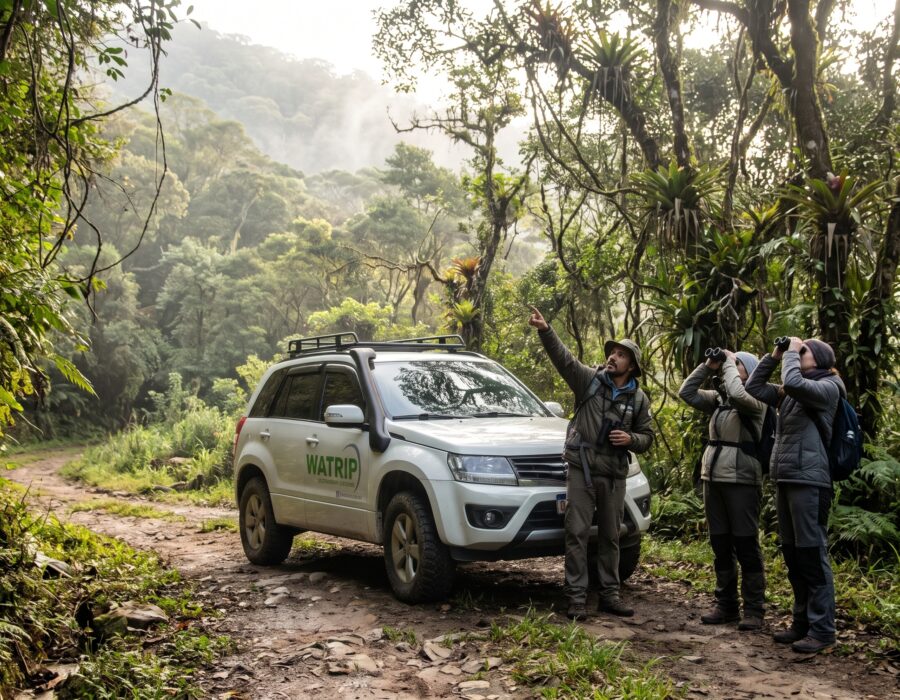
Summer in the mountains of Rio de Janeiro state (December to March) offers stunning scenery, but it also demands absolute respect for the dynamics of the environment. In mountain regions, the hottest months are historically marked by strong weather instability in the afternoon, with storms forming quickly, lightning and flash floods.
For nature and adventure tourism to take place responsibly, the sector is backed by a series of laws and technical standards. Risk management is not an arbitrary choice by the operator but a legal requirement to protect visitors. Here are the regulatory pillars that guide the sector.
Reading the environment and making decisions
In ecotourism, weather analysis goes far beyond looking at the sky early in the morning. In valleys and at waterfalls, the weather can change in minutes and drastically change the level of exposure to danger.
Planning a safe experience requires constant monitoring of weather radar and close attention to official Civil Defense alerts. Visiting a natural attraction while ignoring the forecast exposes the group to unnecessary risk and goes against the sector’s good practices.
Safety Management System (SMS): a regulatory obligation
Managing the unexpected is where formal tourism parts ways with amateur operations. Adventure tourism activities must operate under the guidelines of a Safety Management System (SMS), a requirement based on Decree No. 7,381/2010 and structured by the technical standard ABNT NBR ISO 21101.
Adopting an SMS requires the tourism provider to have a formal risk map, standardized operating protocols and emergency response plans. If weather conditions signal danger, such as approaching lightning or the risk of a flash flood, the tour must be adapted or suspended immediately. Suspending an activity as a precaution is the standard put into practice and proof that protecting life comes before completing the itinerary.
Logistics and safe access in remote areas
Safety management starts before the trail and continues until visitors are back in town. Reaching natural attractions often means traveling on dirt and unpaved roads, which are hit hard by summer storms.
In this setting, transport logistics are not a mere detail but a central part of the emergency plan. Professional operations have mapped escape routes, proper communication and plans to reach or evacuate remote areas quickly if the weather deteriorates fast. Making sure the group is not stranded or exposed during a sudden storm is part of effective risk management.
The importance of an informed choice
Nature tourism is a chance for immersion, ecological learning and connection with biodiversity. Yet this experience only fulfills its true purpose when it is grounded in legal compliance and professionalism.
Whether you want to understand the importance of conserving the local ecosystem or explore the mountains with the peace of mind of being covered by technical safety standards, what matters is knowing who you travel with. Demanding compliance with the law and safety standards is the first step toward a truly unforgettable experience.