Birdwatching tourism belongs to the nature tourism segment and, in many settings, operates under the same management logic used in adventure tourism. Although it does not necessarily involve high-risk activities, guiding visitors in natural environments requires compliance with the standards, protocols and guidelines set out in federal regulations, including Article 34 of Decree No. 7,381/2010, which sets obligations for agencies and operators that sell activities in natural environments.
The rule requires tourism operations to prioritize safety, risk management, transparency and professionalism. These principles apply directly to birdwatching tourism, where responsible guiding is key to both the quality of the experience and the integrity of the environment.
Qualified technical guiding
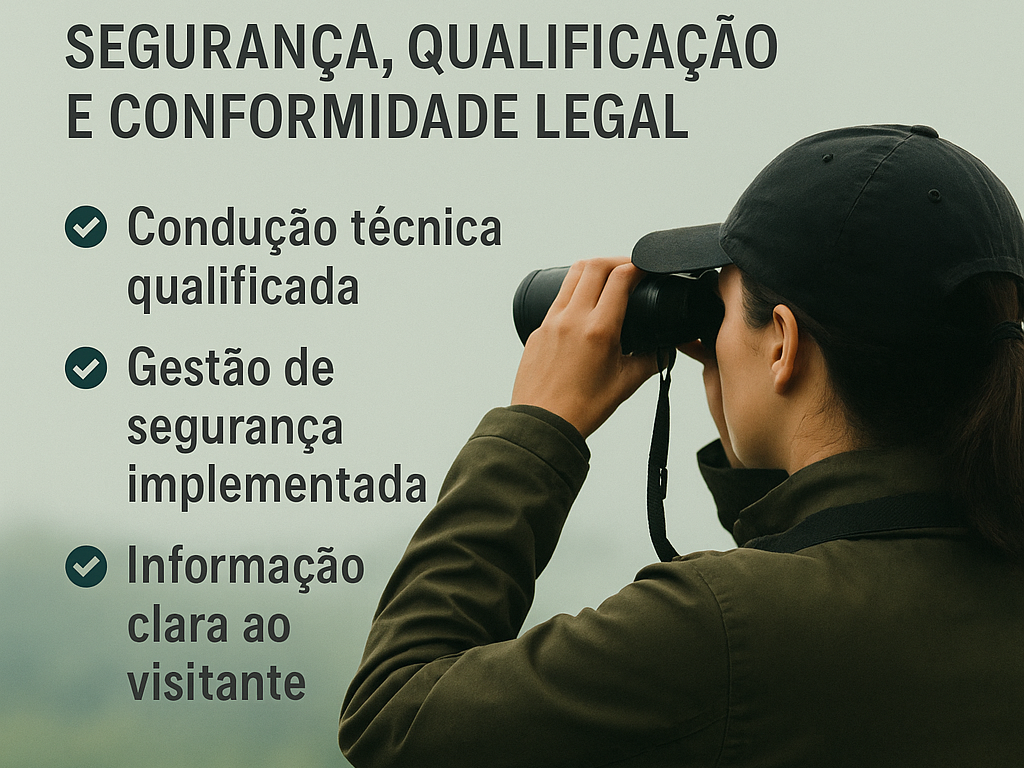
The article requires agencies to have guides trained according to official standards, with sound knowledge of the area, its wildlife, safety protocols and visitor management. In birdwatching, this means working with guides who can interpret the environment, direct the group, understand bird behavior and lead the activity with technical precision.
An implemented safety management system
The law also requires a safety management system covering risk analysis, prevention protocols, operational communication, emergency procedures and formal records of every activity. Even in non-competitive, physically low-impact activities such as birdwatching, structured management reduces vulnerabilities and makes the service more reliable.
Clear information for visitors
The decree reinforces the need to give clients formal documents covering:
– instructions for using equipment, when applicable;
– good environmental practices;
– safety measures;
– the risks associated with the experience;
– recommendations for preparation;
– and the client’s responsibilities.
These terms, signed by the client, ensure transparency and alignment between visitor and operator, underlining the importance of planning and communication before entering natural areas.
Optional insurance and mandatory records
The rule also provides for the offer of specific insurance, as well as the obligation to keep the signed terms on file. This ensures governance, traceability and operational compliance, strengthening the credibility of the activity and protecting both visitor and provider.
Recreational activity in natural environments
The article defines adventure tourism as recreational tourism activities in natural environments and lists a variety of them. Although birdwatching is not mentioned directly, it falls under the same principle of tourist movement in natural areas and benefits from the same technical framework that structures safety and qualified management.
Putting it into practice in birdwatching
For specialized operators and guides, meeting the requirements of Article 34 means working with:
• formally trained guides;
• implemented risk management;
• clear communication with visitors;
• standardized documentation;
• detailed environmental guidance;
• consistent safety procedures;
• a technical approach aligned with national standards.
Together, these elements establish birdwatching tourism as a professional, responsible activity in line with the best traditions of ecotourism, enriching the visitor experience and contributing to the conservation of the region’s natural areas.
Watrip Turismo – Safety, sustainability and authentic experiences in the heart of nature.